1985
September 1985
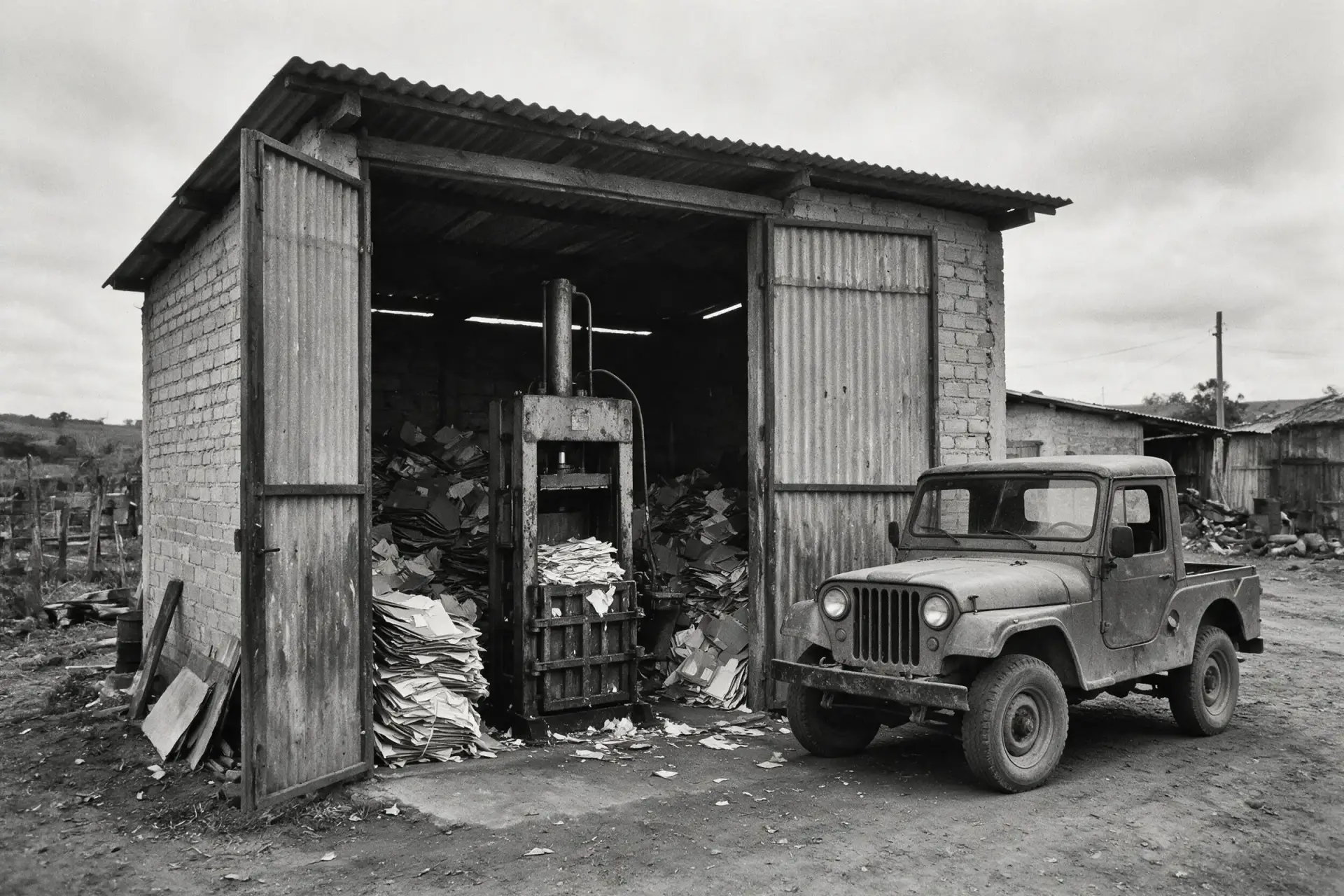
Almeida is founded in São José, Santa Catarina, operating from a 300 m² warehouse with one vertical press and one gasoline-powered Willys pickup truck.


Grupo Almeida · Our story
A story that would span four decades began there.
Origins
September 1985
Almeida is founded in São José, Santa Catarina, operating from a 300 m² warehouse with one vertical press and one gasoline-powered Willys pickup truck.
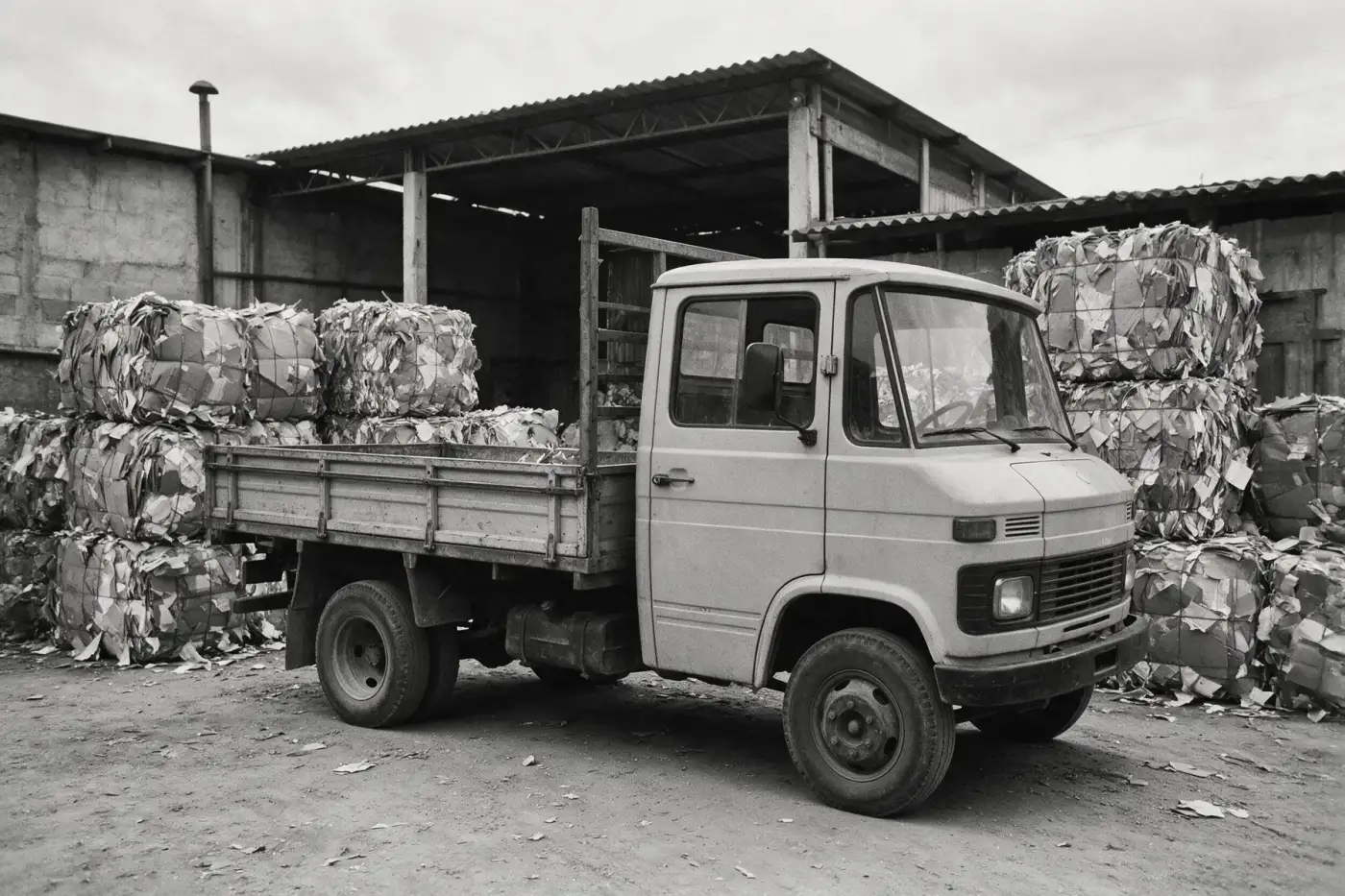
Almeida adds its first Mercedes-Benz 608 truck and installs a second vertical press.
 Illustrative image
The fleet grows with a new Volkswagen 6.90.
The São José unit grows to 500 m².
Almeida opens a unit in Blumenau, Santa Catarina.
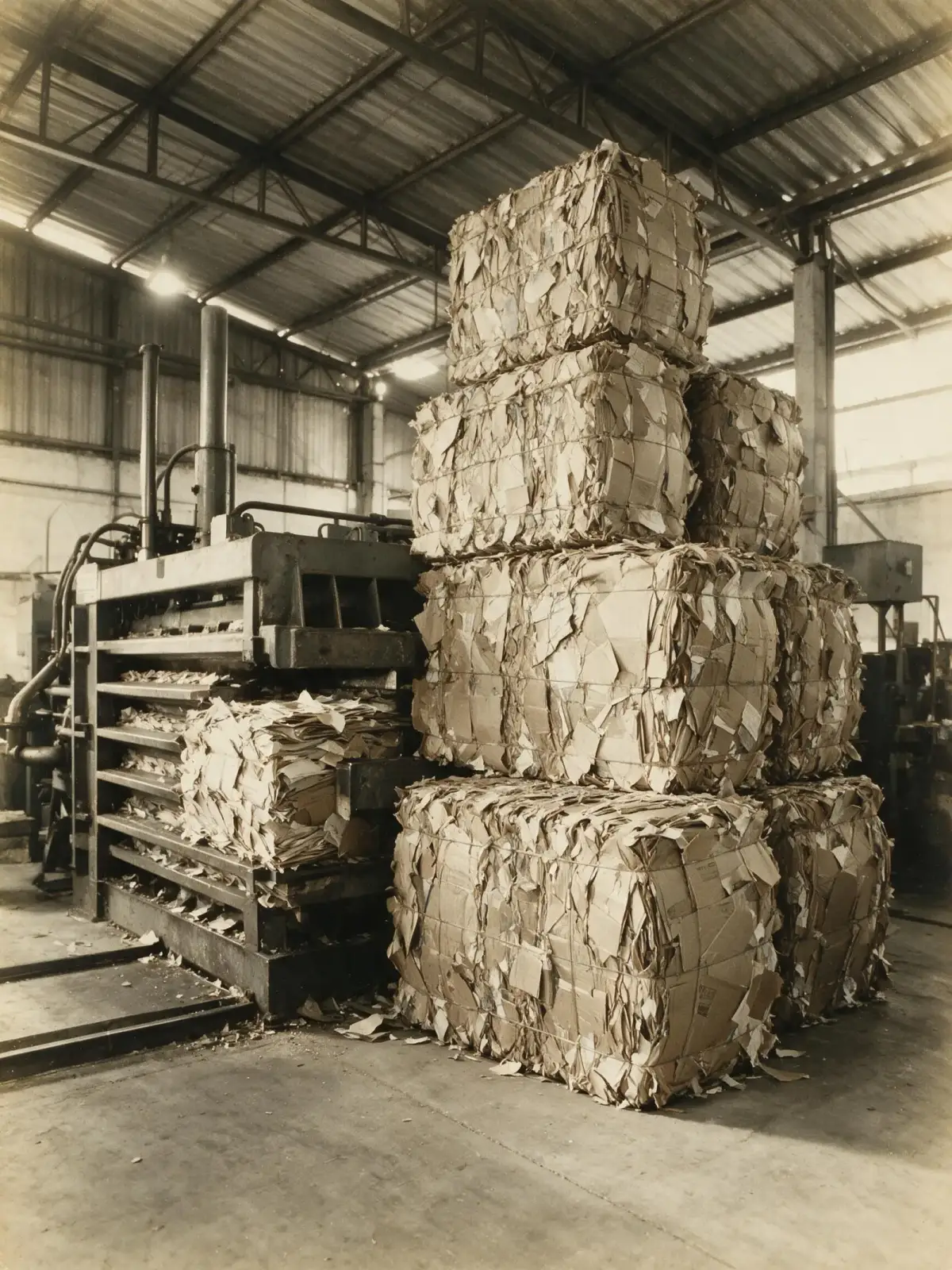
Almeida installs its first horizontal baler, producing 400 kg bales.
 Illustrative image
Evolution
Almeida adds its first Roll On/Roll Off truck, expanding logistics capacity.
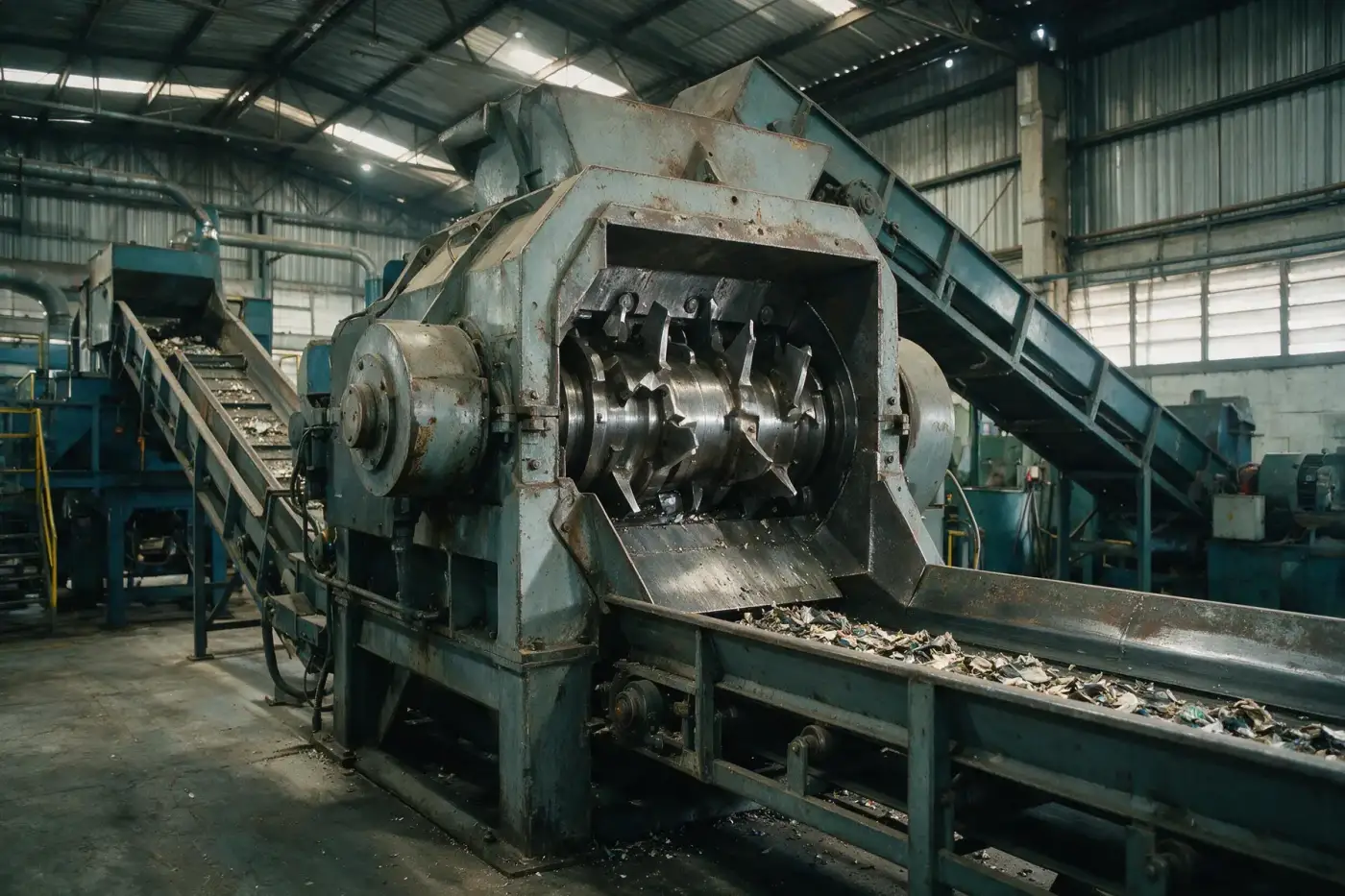
Almeida installs its first shredder, increasing material processing capacity.
 Illustrative image
Almeida builds a new 2,500 m² warehouse.
Almeida installs its first imported horizontal baler, producing 800 kg bales.
The industrial structure grows to 3,100 m².
Almeida installs a second baler for 800 kg bales.
Almeida installs a new imported baler, producing 1,100 kg bales.
 Illustrative image
The unit expands again, reaching a total built area of 3,500 m².
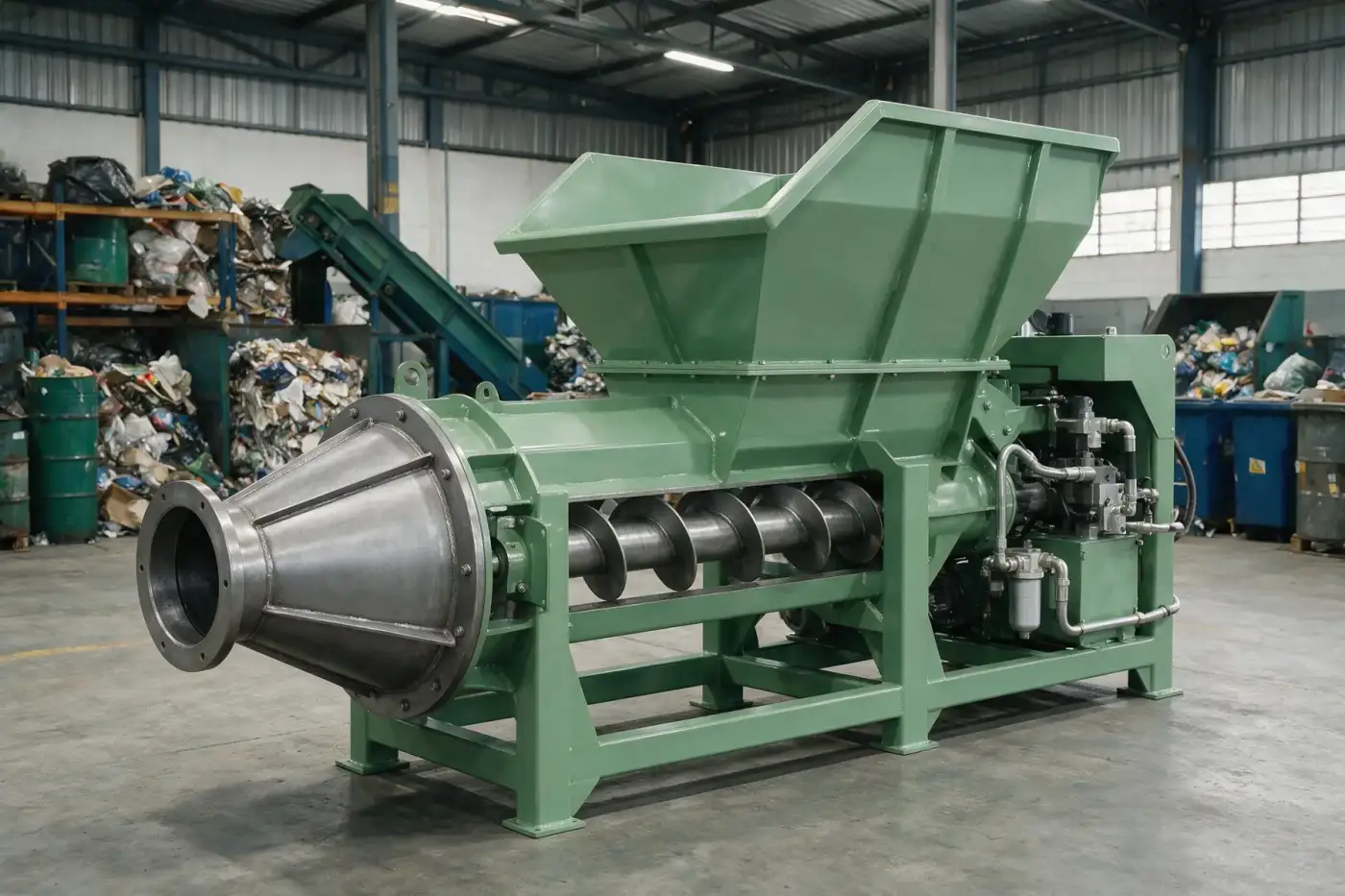
Almeida installs its first imported screw-type waste compactor, marking the start of its partnership with Pöttinger.
 Illustrative image
Almeida installs its first two-chamber balers, increasing operational efficiency and marking the start of its partnership with Austropressen.
Almeida acquires a 10,000 m² plot of land for its new headquarters.
Expansion
Almeida begins operations in Chapecó, Santa Catarina.
São José
Almeida opens its new headquarters, with 5,500 m² of built area.
Almeida installs a second baler for 1,100 kg bales.
Almeida acquires Saturno, in Blumenau, strengthening the group's regional presence.
 Illustrative image
Almeida opens its Araquari unit in Santa Catarina.
Almeida acquires NSC, in Joinville, Santa Catarina.
New cycle
Almeida acquires a 10,000 m² plot of land in Araquari, preparing the unit's expansion.
Almeida acquires a 10,000 m² plot of land in Chapecó for future expansion.
Almeida opens its new Araquari unit, with 3,000 m² of built area.
In square meters
1985 → 2026
Four decades of investment in infrastructure, technology and people turned a family operation into a group working across recycling, waste management, environmental logistics and equipment.
Outline of Santa Catarina based on IBGE's official territorial data. The points mark the chronological order in which the group arrived in each city.